
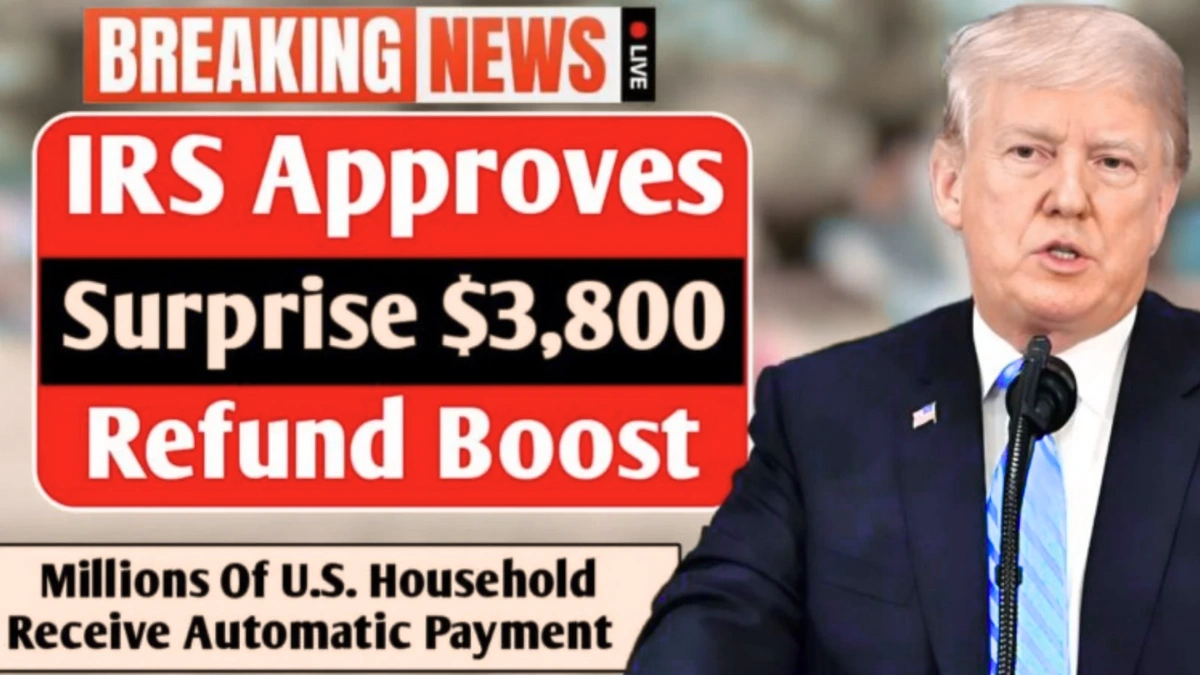
$3,800 IRS Refund Boost in 2025: A growing claim circulating online suggests that the IRS is offering a $3,800 refund boost in 2025, leading many to believe a new federal payment or special tax program has been approved. While the headline has gone viral, the truth is more complex. There is no single federal program guaranteeing an automatic $3,800 refund boost. Instead, the rumored amount appears to come from a combination of existing tax credits, improved deductions, and inflation-adjusted benefits that some taxpayers may qualify for depending on their income, filing status, and dependents.
Understanding what is real and what is misinformation can help taxpayers protect themselves from scams and ensure they receive the benefits they are entitled to during the 2025 tax season.
Where the $3,800 Rumor Came From
$3,800 IRS Refund Boost in 2025- The rumor appears to stem from news about expanded credits, increased standard deductions, and inflation-adjusted tax brackets that may result in higher refunds for some filers in 2025. Social media posts simplified the message and turned it into claims of an “automatic $3,800 boost,” which is not accurate.

Some taxpayers may see larger refunds, but only if they qualify for specific credits and deductions.
Possible Credits That Can Increase Refunds
A larger refund is possible if a taxpayer qualifies for one or more income-based tax benefits. These are not new programs but existing federal credits adjusted annually.
Credits that may increase refund amounts include:
- Earned Income Tax Credit (EITC)
- Child Tax Credit
- Child and Dependent Care Credit
- Education-related credits
- Recovery credit carryovers (if applicable)
Only eligible filers can receive these amounts, and the total refund will depend on overall filing details.

Who Might Qualify for a Larger Refund in 2025
Refund increases generally apply to working families, individuals with children, low-to-moderate income earners, students with eligible education costs, or taxpayers with high deductible expenses.
Eligibility may depend on:
- Household income
- Number of dependents
- Whether the taxpayer worked during the year
- Filing status (married joint, single, head of household)
- Eligible childcare or education expenses
There is no universal guarantee of a $3,800 increase.

How to Avoid Fake IRS Offers and Scams
As refund rumors spread, scammers often target taxpayers with fake emails, calls, and text messages pretending to offer early access to refunds or special payments. The IRS never contacts taxpayers by text, social media message, or unsolicited email requesting financial information.
| Warning Sign | What It Means |
|---|---|
| Requests for immediate payment or banking login | Scam attempt |
| Messages claiming an exclusive refund or deadline | Likely false |
| Links to login pages not ending in .gov | Avoid and do not enter data |
| Offers to “unlock” the refund for a fee | Fraud tactic |
Taxpayers should only use official IRS portals, licensed tax professionals, or trusted filing platforms.
How to Legitimately Increase Your Refund
The best way to maximize refunds is to document expenses throughout the year and confirm eligibility for tax credits. Filing electronically with correct dependents, updated income information, and verified documentation improves approval speed and accuracy.

Conclusion: There is no official $3,800 automatic IRS refund boost for 2025. However, some taxpayers may receive higher refunds if they qualify for multiple federal tax credits and inflation-adjusted benefits. Staying informed, tracking eligibility, and avoiding scams can help ensure taxpayers receive what they are owed — safely and accurately.
Disclaimer: Refund amounts and credit eligibility vary based on income, filing status, dependents, and federal policy updates.

